What is Rajaji National Park Famous For?
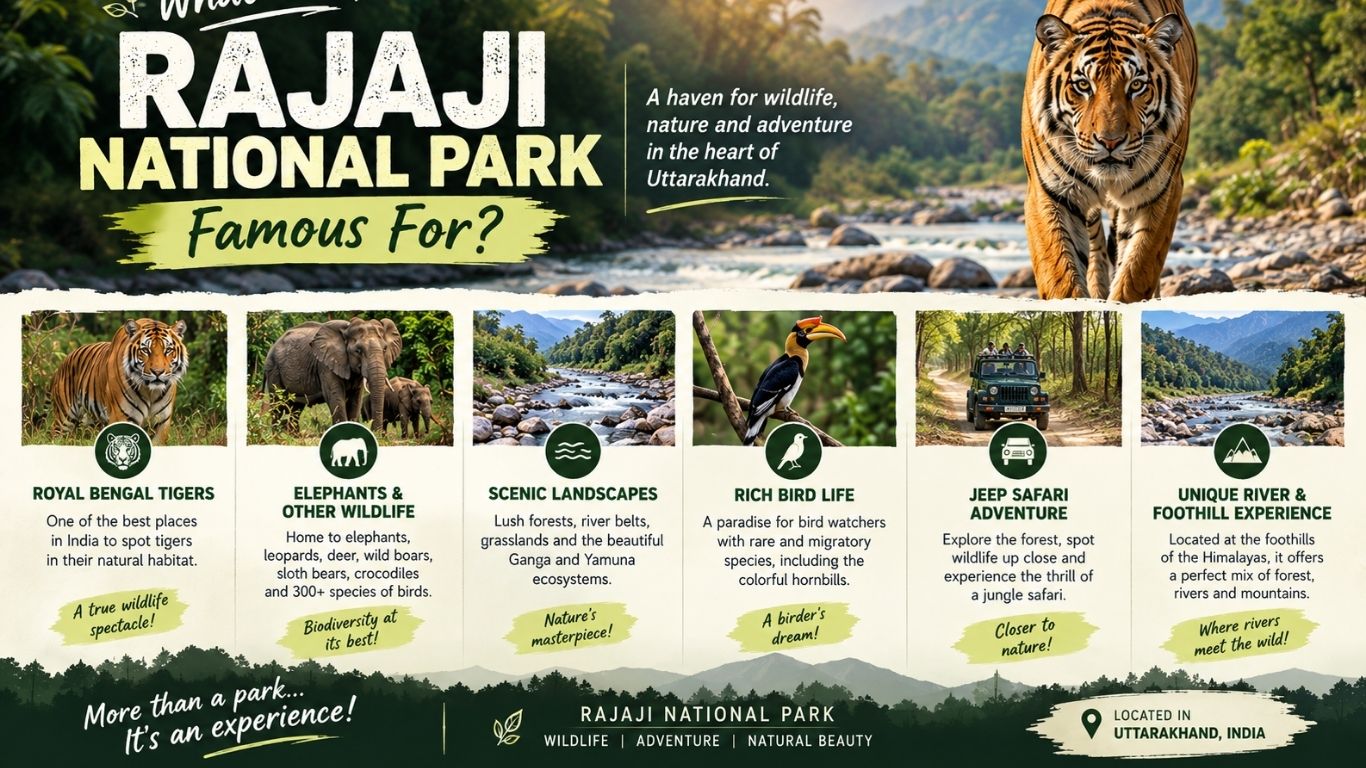
- •What is Rajaji National Park Famous For?
- •1. Asian Elephants — The Star Attraction
- •2. A Growing Population of Bengal Tigers
- •3. A Birdwatcher’s Paradise
- •4. The Ganga River and Riverine Landscape
- •5. Its Position at the Meeting Point of Two Ecozones
- •6. A Vital Wildlife Corridor
- •7. Multiple Safari Zones for Different Experiences
- •8. Leopards and Diverse Herbivores
- •Frequently Asked Questions (FAQs)
What is Rajaji National Park Famous For?
Rajaji National Park, spread across the Shivalik foothills of Uttarakhand, is one of North India’s richest wildlife destinations — yet it remains far less crowded than parks like Corbett or Ranthambore. If you’re planning a trip and wondering exactly what makes this park special, here’s a complete look at what Rajaji is famous for. You can also book a guided jeep safari through rajajisafari.com to experience all of this firsthand.
1. Asian Elephants — The Star Attraction
Rajaji National Park is best known as one of India’s most important habitats for wild Asian elephants. Estimates put the elephant population at roughly 500 or more, moving in herds led by a matriarch across the park’s forests, grasslands, and riverbanks. The Chilla and Motichur zones are especially known for frequent elephant sightings, and the park is officially protected under Project Elephant.
2. A Growing Population of Bengal Tigers
Since being declared a Tiger Reserve in 2015 — India’s 48th and only the second in Uttarakhand after Jim Corbett — Rajaji has become an increasingly important site for Bengal tiger conservation. Estimates of the resident tiger population range from around 15–20 up to 50+, depending on the source and survey year. While sightings are rarer here than in more famous tiger parks, Rajaji’s protected status under Project Tiger has helped its tiger numbers grow steadily.
3. A Birdwatcher’s Paradise
With 300–400+ recorded bird species, Rajaji is considered one of the best birding destinations in North India. Highlights include the Great Hornbill, Oriental Pied Hornbill, Crested Kingfisher, Pallas’s Fish Eagle, Brown Fish Owl, and Crimson Sunbird. The mix of riverine habitat, sal forest, and grassland creates ideal conditions for such high bird diversity.
4. The Ganga River and Riverine Landscape
Few Indian national parks combine terrestrial wildlife with a major river ecosystem the way Rajaji does. The Ganga River flows through the park for roughly 24 kilometres, along with tributaries like the Song, Suswa, and Rawasan rivers. This gives Rajaji a rare mix of dry Shivalik forest and riverine wetland habitat, supporting species like gharials and king cobras alongside its larger mammals.
5. Its Position at the Meeting Point of Two Ecozones
Rajaji sits at the exact point where the Himalayan Shivalik range meets the Indo-Gangetic plains. This unique geography is a major reason for its rich biodiversity — few other parks in India offer this blend of hill forest and plains ecosystem in one protected area.
6. A Vital Wildlife Corridor
Rajaji forms the western anchor of the Rajaji–Corbett Tiger Conservation Unit, a forest corridor connecting it to Jim Corbett National Park. It’s also part of the broader Terai Arc Landscape, one of India’s most important elephant and tiger conservation corridors. This connectivity is essential for maintaining healthy, genetically diverse wildlife populations.
7. Multiple Safari Zones for Different Experiences
Rajaji is divided into several safari zones, each with its own character:
- Chilla – riverine landscapes near Haridwar, high elephant activity
- Motichur – dense sal forest near Rishikesh, key elephant corridor
- Mohand – hilly terrain near Dehradun, good for leopards and birding
- Ranipur, Jhilmil, and Gohri – quieter zones with their own distinct habitats
Because each zone offers something different, many visitors choose to explore more than one — something the team at rajajisafari.com can help plan based on what wildlife you most want to see.
8. Leopards and Diverse Herbivores
Beyond its flagship elephants and tigers, Rajaji supports a healthy population of leopards, along with sambar deer, chital (spotted deer), barking deer, wild boar, and nilgai antelope — making every safari drive a chance to spot a wide range of species.
Frequently Asked Questions (FAQs)
1. What is Rajaji National Park most famous for? Rajaji is most famous for its large population of wild Asian elephants, along with its status as a Bengal tiger reserve and its rich birdlife.
2. Does Rajaji National Park have tigers? Yes. Rajaji was declared a Tiger Reserve in 2015 and has a growing tiger population, though sightings are less frequent than at parks like Corbett or Ranthambore.
3. How many elephants are in Rajaji National Park? Estimates suggest Rajaji is home to roughly 500 or more wild Asian elephants, making it one of India’s key elephant habitats.
4. Is Rajaji good for birdwatching? Yes, Rajaji is considered a birdwatcher’s paradise, with 300 to 400+ recorded species, including hornbills, kingfishers, and birds of prey.
5. Which river flows through Rajaji National Park? The Ganga River flows through the park for about 24 kilometres, along with tributaries such as the Song, Suswa, and Rawasan rivers.
6. What are the main safari zones in Rajaji National Park? The key zones are Chilla, Motichur, Mohand, Ranipur, Jhilmil, and Gohri, each offering a different terrain and wildlife experience.
7. Is Rajaji National Park connected to Jim Corbett National Park? Yes, Rajaji forms the western end of the Rajaji–Corbett Tiger Conservation Unit, a forest corridor that helps tigers and elephants move safely between the two reserves.
8. What other animals can be seen in Rajaji besides elephants and tigers? Visitors can also spot leopards, sambar and chital deer, barking deer, wild boar, nilgai antelope, and reptiles such as king cobras and gharials.
9. When is the best time to visit Rajaji National Park for wildlife sightings? The safari season generally runs from mid-November to mid-June, with summer months (March–June) often bringing more animals to water sources.
10. How do I book a safari to see Rajaji’s famous wildlife? You can book a guided jeep safari through rajajisafari.com, which offers zone-specific tours to help you spot elephants, tigers, and birdlife.
Rajaji Safari Desk
Certified Wildlife DeskThe Rajaji Safari editorial team provides verified jungle safari permit guidelines, gate shift timings, and conservation updates for Rajaji National Park and Tiger Reserve, Uttarakhand.
Explore More Wildlife & Safari Guides
View All ArticlesWildlife GuideWhat is Rajaji National Park Famous For?
 Wildlife Guide
 Wildlife Guide