
Rajaji Safari with Kids: A Complete Family Guide | Rajaji safari
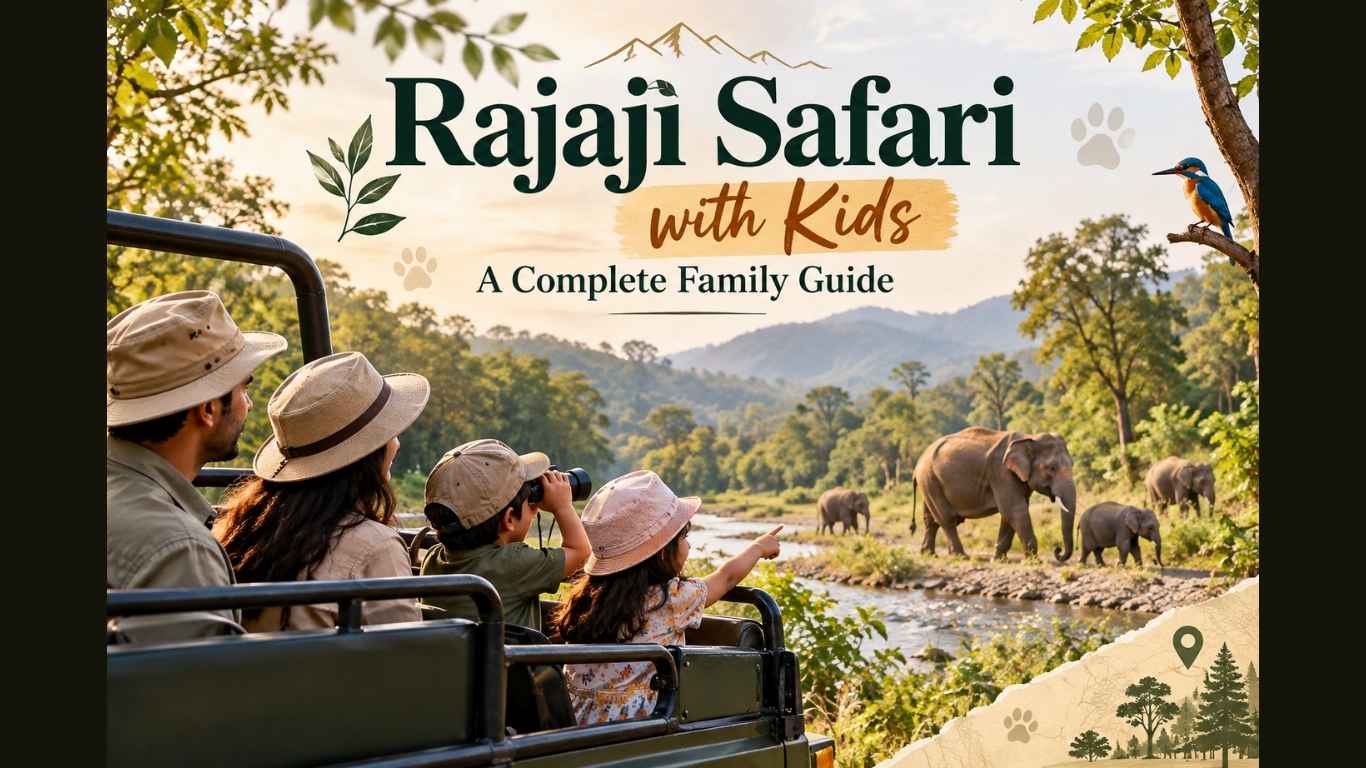
Planning a Rajaji safari with young kids? Here’s what to know about age limits, comfort, timing and keeping children engaged on a jungle drive. Book at Rajajisafari.com.
Rajaji National Park is a reasonably good choice for a family safari with kids. The drives are a manageable length, the terrain isn’t physically demanding since you stay seated in the jeep, and the mix of common wildlife (deer, monkeys, birds, often elephants) tends to hold a child’s attention better than people expect. That said, a few practical things, timing, silence, comfort and expectations, make a real difference to how smoothly it goes.
Is Rajaji Safari Safe for Children?
Generally, yes. Safaris take place in enclosed jeeps with an experienced naturalist guide, and visitors never leave the vehicle. The real safety factors are the same ones that apply to any wildlife safari:
- Children must stay seated and follow the guide’s instructions
- No reaching out of the vehicle or trying to touch or feed animals
- Guides are trained to manage close wildlife encounters calmly
Most families find the structure of a jeep safari reassuring rather than risky, since you’re never on foot near wildlife.
What Age Is Right for a Rajaji Safari?
There’s no strict minimum age for the jeep safari itself, but age genuinely affects how enjoyable it’ll be:
| Age Group | How It Usually Goes |
|---|---|
| Under 3 | Can be difficult, long stretches of silence and stillness don’t suit very young toddlers |
| 4 to 7 | Works well if paired with the right expectations and some preparation beforehand |
| 8 and above | Generally the easiest age group, old enough to understand the rules and stay engaged |
If you’re travelling with a toddler, a shorter safari slot and realistic expectations will help more than anything else.
The Biggest Challenge: Keeping Kids Quiet
Silence is non-negotiable on a safari, animals react to noise, and a loud vehicle significantly reduces everyone’s chances of a good sighting. This is usually the single biggest adjustment for families, since young kids aren’t naturally built for sitting still and quiet for a few hours.
What tends to help:
- Explain beforehand, in simple terms, why quiet matters (“the animals will hide if we’re loud”)
- Turn it into a game: who can spot something first, whisper only
- Bring something small and silent to keep little hands occupied, without screens or noisy toys
- Choose the shorter morning slot if your child has a limited attention span
Choosing the Right Timing for Families
Morning safaris are generally better for families with younger kids. The weather is cooler, kids are usually more alert early in the day, and animals are often more active near dawn.
Evening safaris can work well for slightly older children, especially since the light is often beautiful for photos and the animals coming out to feed and drink gives more visual variety.
Avoid peak summer afternoon heat with very young children if you have a choice of slot.
What to Pack for a Family Safari
- Water bottles for everyone (carry back all waste, nothing is allowed to be left behind)
- A light snack for before or after the safari (not to be eaten loudly inside the jeep, and never to feed animals)
- Sunscreen and hats
- A light jacket for winter morning drives, as open jeeps get cold before sunrise
- Binoculars sized for small hands, if your child is old enough to use them
- Motion sickness remedies if your child is prone to it, since jeep tracks can be bumpy
Dress Code for Kids
The same rules apply to children as adults: dull colours like khaki, olive green or grey, avoiding bright colours, especially white and red. It’s worth packing or buying appropriate colours in advance rather than discovering at the gate that your child’s favourite bright jacket isn’t ideal.
Managing Expectations with Kids
This matters as much for parents as for children. Set the expectation beforehand that:
- You might not see a tiger or leopard, and that’s completely normal
- Deer, monkeys, birds and often elephants are the realistic, likely sightings
- The forest itself, the trees, the river, the quiet, is part of the experience, not just a wait for animals
Kids who go in expecting a guaranteed “zoo-style” animal parade are more likely to be restless. Kids who go in with a sense of adventure and curiosity tend to enjoy it far more, regardless of what they actually see.
Making the Safari More Engaging for Kids
- Turn it into a simple spotting game. Who sees the first deer, the first bird, the first monkey.
- Let them ask the guide questions during quieter stretches, most naturalists are happy to explain things to curious kids.
- Point out small details, not just big animals: a butterfly, a termite mound, a bird’s nest.
- Keep a simple tally or checklist of animals spotted, it gives kids something active to do without being noisy.
What to Avoid
- Don’t bring toys that make noise or require screens with sound
- Don’t let kids stand up or reach outside the jeep
- Don’t promise a specific animal sighting, it sets up disappointment
- Don’t overpack snacks that create wrapper noise or litter
- Don’t skip the pre-safari briefing, it helps set the tone for the whole drive
Is a Private Jeep Better for Families?
Generally, yes. A private jeep gives your family more space, more flexibility to manage a restless child without disturbing other visitors, and the freedom to ask your guide more questions. A shared jeep is more economical but means sharing the quiet rules with strangers, which can feel more pressured with young kids.
Frequently Asked Questions
Is Rajaji safari suitable for young kids?
Yes, it’s generally suitable, especially for children aged 4 and above. The jeep safari is physically easy since you stay seated throughout, though very young toddlers may find the quiet, still nature of it harder to manage.
Is there a minimum age for the Rajaji jeep safari?
There’s no strict minimum age for the jeep safari itself, but very young children under 3 often find the long quiet stretches difficult to manage.
Is Rajaji safari safe for children?
Yes. Visitors remain inside the jeep throughout, with an experienced naturalist guide managing any wildlife encounter, so direct risk to children is low as long as safety instructions are followed.
What should I pack for a family safari in Rajaji?
Water, a light snack, sunscreen, hats, a jacket for winter mornings, and dull-coloured clothing for everyone, along with any motion sickness remedy if needed.
Will my child get bored on a Rajaji safari?
It depends on preparation. Children who are told what to expect, encouraged to spot animals quietly, and engaged with simple games tend to stay interested throughout.
Should I book a private jeep for my family?
A private jeep is generally more comfortable for families with young kids, since it offers more space and flexibility without affecting other visitors.
Is a morning or evening safari better for kids?
Morning safaris usually work better for younger kids, since they’re more alert early and the cooler weather is more comfortable.
Where can I book a family-friendly Rajaji safari?
Visit Rajajisafari.com for safari bookings and guidance on choosing the right slot and zone for your family.
Plan a Smooth Family Safari
A Rajaji safari with kids works best when you plan around their age, keep expectations realistic and make quiet, patient watching feel like part of the adventure rather than a chore. With the right preparation, it can be one of the more memorable parts of your family trip. Book your family-friendly safari at Rajajisafari.com.
Rajaji Safari Desk
Certified Wildlife DeskThe Rajaji Safari editorial team provides verified jungle safari permit guidelines, gate shift timings, and conservation updates for Rajaji National Park and Tiger Reserve, Uttarakhand.
Explore More Wildlife & Safari Guides
View All ArticlesWildlife GuideRajaji Safari with Kids: A Complete Family Guide | Rajaji safari
 Wildlife Guide
Online vs Offline Booking for Rajaji Safari: Which Is Better?
 Wildlife Guide